← All booksProject in development

Biblical novel inspired by Judges 11

Jephthah’s Daughter

When memory refuses to let a voice disappear

By Henry J. Noel

MemoryA tragic vowWomen’s silenceHonor
Cover of Jephthah’s Daughter

French edition cover

This project is still being written. This page presents its current direction; the outline and sample may evolve with the manuscript.

The biblical account gives Jephthah’s daughter no name. FleuveVie pauses within that silence to listen to what it holds: fear, honor, faithfulness, and the violence of a word treated as irrevocable.

The novel explores the weight of the vow, a community’s expectations, and the place granted to women’s voices in a world governed by reputation and power.

Beyond the tragedy, it asks about memory: who tells the stories of sacrificed lives, and what happens when the forgotten finally find witnesses?

Inside the book

A path through the story

A working outline for the developing manuscript.

01

The warrior’s return

  1. Prologue — The Nameless Voice
  2. The Child of Exile
  3. A Father at the Gates of Gilead
02

The vow and the victory

  1. The Elders Return
  2. The Spoken Word
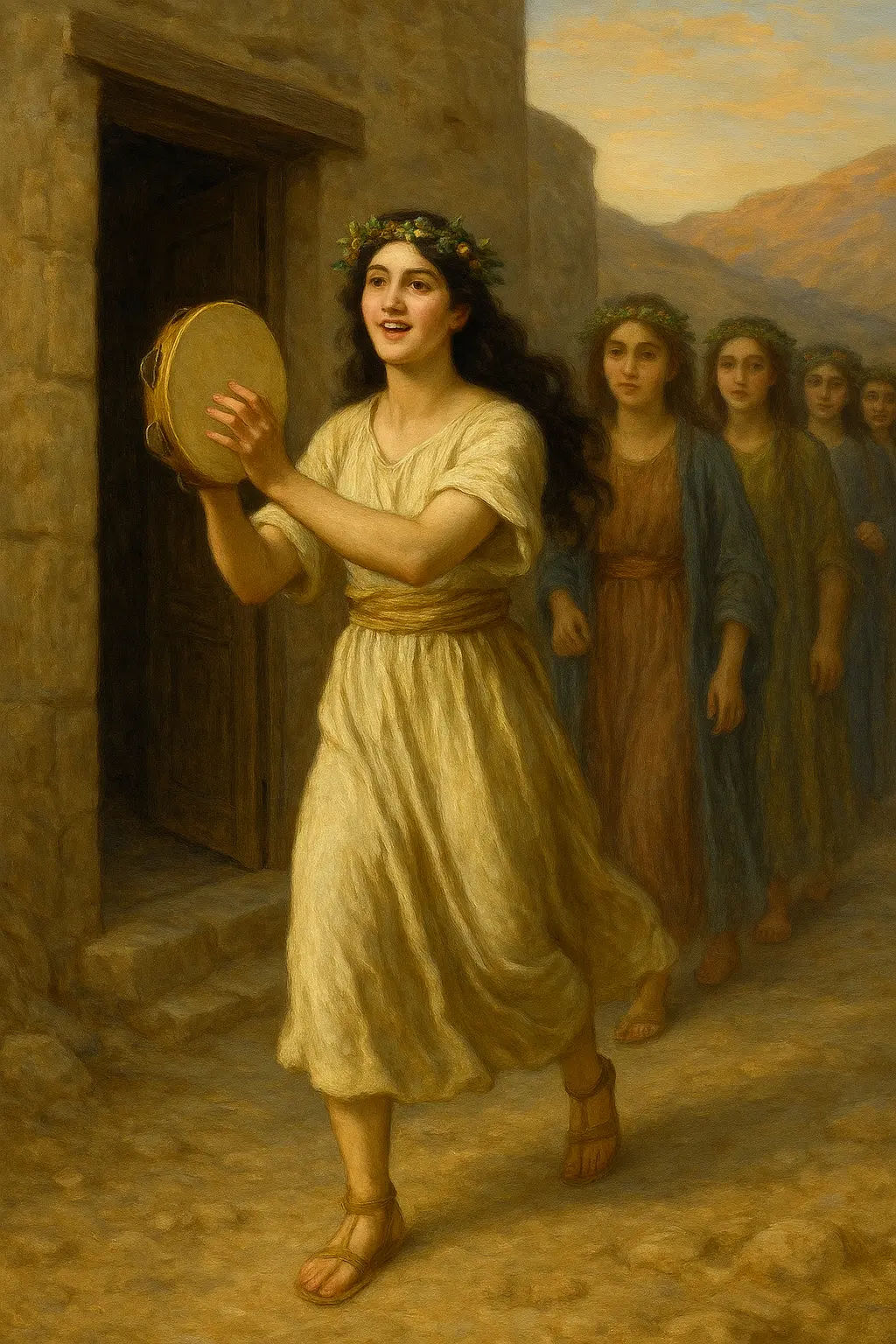
  3. The Tambourine at the Door
  4. The Father’s Silence
03

The women’s memory

  1. Two Months in the Mountains
  2. Those Who Walked with Her
  3. The Day of Return
  4. Epilogue — Every Year

Excerpt — The Nameless Voice

They gave me no name in the story. They called me Jephthah’s daughter, as though my whole life could fit inside my father’s name and the words he had spoken.

Yet before the vow, there was a childhood, songs, friendships, and dreams. And after me, there were women who refused to forget.

Author’s note

Restoring a voice to the one the story does not name

The Bible preserves the memory of Jephthah’s daughter, but not her name. That silence led me to pause before her: not to claim I could fill in history, but to consider the young woman, her relationships, her hopes, and the world around her.

The story faces a tragic word and its consequences without softening them. It asks about honor, paternal authority, spiritual responsibility, and the price paid by those whose voices remain at the edges of power.

This book is still in progress. Its direction, however, is clear: to make memory an act of justice and let the women who remember become guardians of a life history might have reduced to a single verse.

— Henry J. Noel

Reading companions

Continue the reflection

Biblical, literary, and reflective companions to the questions raised by this book.

The Book of Judges

Judges 11

The source account, with its violence, silences, and questions.

Phyllis Trible

Texts of Terror

Reading seriously the biblical accounts in which women suffer violence.

Walter Brueggemann

The Prophetic Imagination

Questioning power and making a different memory possible.

Collective memory

The daughters of Israel

Remembering as an act of faithfulness and justice.

Continue reading

Take the next step at your own pace

The project is in development. Explore the accompanying resources while the manuscript takes shape.

Continue through the library

Ruth and Boaz